The man in the Aldi checkout line wasn't shouting. That's the part that gets me. He was calm, almost conversational, as he suggested the government needed "taking out" by ex-military men. The air grew thick and still. People stared at their shoes. What you’re hearing in that story isn't just one man's fringe opinion. It's the sound of a system glitching. It’s the sound of a Facebook comment section achieving sentience and walking into a grocery store.
We’re seeing this everywhere, aren't we? The polite chat at the bus stop that veers wildly into chemtrails. The casual parent at school pickup who has some… interesting ideas about vaccines. For years, we’ve talked about online radicalization as a problem for disaffected teenagers in dark rooms or angry `boomers` falling for email scams. But the data, and the chilling anecdotes, are pointing to a different epicenter for this earthquake: my generation. `Generation X`.
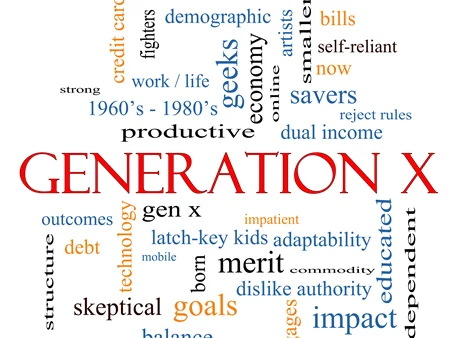
The numbers are staggering. In the UK, as noted in pieces like Meet gen X: middle-aged, enraged and radicalised by internet bile, support for the populist Reform party among 50- to 64-year-olds has nearly doubled. In the US, the `gen x generation` has been dubbed the "Trumpiest generation," more likely than any other `gen x age range` to identify as Republican. The "Cool Britannia" kids who brought Tony Blair to power, the latchkey kids who were supposed to be the cynical, pragmatic bridge between `baby boomers` and `millennials`—what happened to us?
It's easy to blame a mid-life crisis, to say that people in the `gen x years` are just feeling insecure about their jobs and their place in a changing world. And that’s part of it. But it’s not the real story. This isn't a moral failure. It's a systems failure.
Imagine a body that grew up on a perfectly balanced, organic diet for 40 years. Its immune system is calibrated for known pathogens. Then, one day, you bypass the digestive system entirely and hook that body up to an IV drip of pure, uncut, high-fructose corn syrup mixed with amphetamines. The body wouldn't know how to process it. It would go into shock.
That's `Generation X`. We were the last generation to have an analog childhood and a digital adulthood. We grew up with information gatekeepers: the nightly news, the morning paper, the encyclopedia. It was a curated reality. Then, just as we hit the most vulnerable years of our lives—middle age, with its anxieties about mortality, relevance, and finances—the internet firehose was turned on us full blast.
This wasn't just information. It was a new kind of information delivery system, driven by engagement-based algorithmic amplification—in simpler terms, the machine is designed to show you more of whatever makes you angry, scared, or tribal, because that’s what keeps your eyes glued to the screen. `Millennials` and `Gen Z` grew up swimming in this digital ocean; they developed a native, if cynical, understanding of its currents. But for `Gen X`, it was a flash flood. Our analog immune systems were overwhelmed. We never had the chance to build up the antibodies to the high-potency disinformation and rage-bait that the algorithm serves up for breakfast, lunch, and dinner.
This is the kind of breakthrough in social engineering that reminds me why I got into this field in the first place—to understand the profound, often invisible, ways technology reshapes our humanity. We’re not just talking about politics; we’re witnessing a fundamental rewiring of our social fabric happening in real-time, and the feedback loops are getting tighter and faster every single day. What used to take years of state-run propaganda now takes months of algorithmically targeted content. So, the most important question isn't "Why is `Gen X` so angry?" It's "What invisible machine is manufacturing that anger at an industrial scale?"
The scary part isn't that this is happening. The scary part is how little we’re studying it. We have armies of the world's brightest minds optimizing these systems to sell us sneakers and subscriptions, but a project like Smidge—a tiny, three-year study on how to de-radicalize 45- to 65-year-olds—is a shocking rarity. We are all subjects in the largest, most unregulated psychological experiment in human history, and we’re barely even taking notes.
My generation, `what is Gen X` if not the great beta testers, likes to think we're savvy. We’re not our parents fumbling with the iPad, and we’re not our TikTok-addled kids. We think we can separate the online world from the "real" world. But the man in Aldi proves that the fourth wall is gone. The simulation has breached containment. The distinction between online discourse and offline behavior was always a flimsy membrane, and now it has completely dissolved.
This isn't unlike the invention of the printing press. It, too, unleashed a torrent of information that bypassed the old gatekeepers, leading to centuries of social and political upheaval. But eventually, we developed new systems to manage it: journalism, peer review, libel laws, a shared set of societal norms. We are in that same chaotic, terrifying, and ultimately hopeful moment right now. We are seeing the raw, unfiltered impact of a world-changing technology before the guardrails have been built.
So, what do we do? We can’t put the genie back in the bottle. But we can start to understand the physics of the bottle itself. We need to shift the conversation from blaming the user to examining the code. Are these platforms designed to foster understanding, or to maximize outrage? What would a social network look like if it were optimized not for "time on site," but for "well-being" or "civic health"? These aren't just technical questions; they are the defining moral questions of our time.
This isn't a story about a lost generation. It's a wake-up call about the architecture of our new reality. `Generation X` isn't the problem; they are the most visible symptom of a system that profits from division. They are the canaries in the digital coal mine, and they are choking. We can stand back and judge them for their confusion and rage, or we can see their plight for what it is: a warning. We built this machine. We fed it our data. And now we have a profound responsibility—and an incredible opportunity—to redesign it with human values at its core. The future isn't about logging off; it's about building a better internet. And that's a project for all of us.